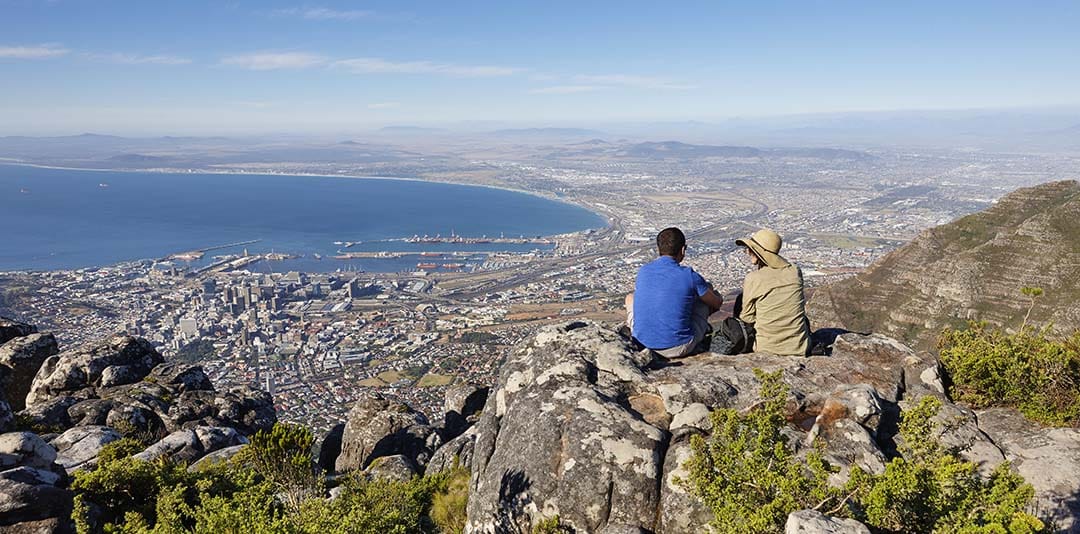
Cape Town has a way of transforming the way we travel, and indeed the way we see ourselves moving around in this world. Perhaps it’s the geography. Few places have mastered the art of a grand entrance quite like Cape Town does. Table Mountain presides over the city with an assured maternal grasp. The Atlantic Ocean is consistent with its ever-changing tides and hues of blue. Her accompanying coastal roads appear to have been mapped by our imagination. There are vineyards tucked into valleys, secret beaches that are yet to be discovered, and winding mountain roads that make the journey as compelling and mesmerising as the destination. The scenery is so wildly evocative it’s often hard to regale the routes to any eager listener, who’s hanging on to every word of your travelling tales.
Cape Town’s appeal is not only a matter of good looks. The Mother City’s real magic lies in the character of the place. In the curious and compelling collision of cultures, histories and perspectives that gives the city its pulse. Evident in her evolution, this is an urban memoir, written across every pavement. Its past is complex, its present full of creative energy, and its future is being shaped by a generation of artists, designers, chefs and thinkers who are giving the city an increasingly distinctive voice.
It’s apparent that the city harnesses many personalities in the soul of her soil. The old Cape Dutch buildings, Georgian façades and colourful Bo-Kaap streets sit alongside contemporary architecture, and design studios. The art scene is equally revealing. From the remarkable Zeitz MOCAA to the smaller, independent galleries scattered throughout the city, creativity is carried from every post to every pillar. There is an irrepressible African perspective at play, expressed through art, fashion, photography and interiors, which gives Cape Town a cultural confidence entirely its own. It’s a city that’s earned its reputation of looking outwards, without ever losing sight of where it’s come from.
And then, of course, there is the food. Cape Town’s culinary identity is wonderfully layered. The spice and heritage of the Cape Malay kitchen, the freshness of the Atlantic’s daily catch, exceptional local produce, inventive contemporary cooking and a wine culture that deserves its global acclaim. Long lunches have a way of becoming early evenings, particularly when the setting involves a vineyard, a mountain backdrop and an expansive body of blue.
But perhaps the most compelling reason to visit Cape Town is something less tangible. It’s the feeling of possibility. The way a morning swim can reset an entire day. How a walk along the nature trails awakens the senses. The city encourages you to look again, to notice more, to become a little more receptive to the world beyond your usual orbit. You leave with the Mother City’s perspective of a landscape, and yourselves within that landscape, harnessed in your hearts.
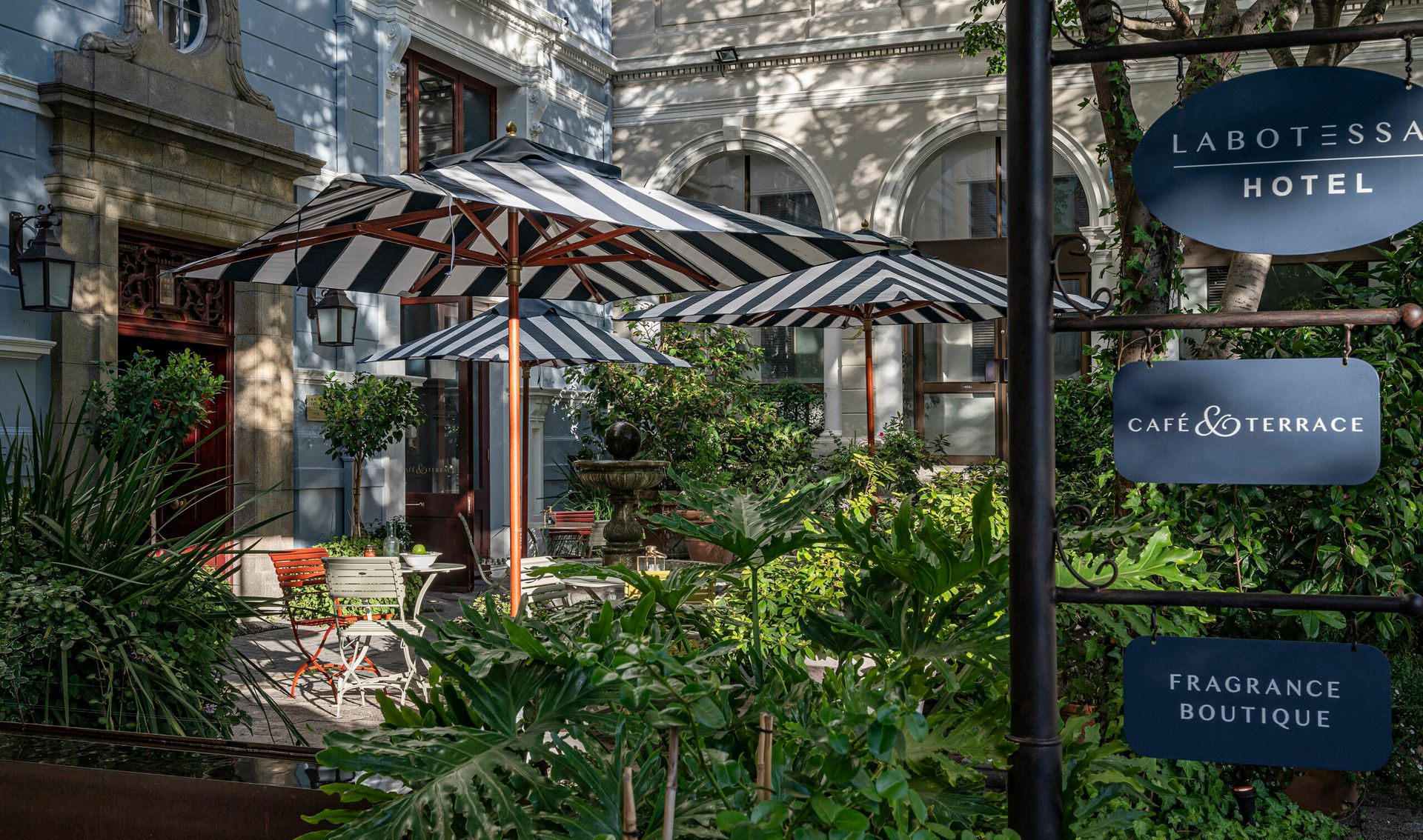
And where you choose to stay makes all the difference. For those who want to feel the true rhythm of the city, the historic quarter of Cape Town is a particularly rewarding place to settle. Where the streets have a lived-in energy, cafés spill onto pavements, heritage buildings reveal their histories and the city’s festivities unfold just beyond your door. Labotessa’s Presidential Suite is especially appealing for a group of travellers wanting the privacy and conviviality of their own townhouse, with the considered luxuries of a boutique hotel. Spanning two floors and 310 square metres, it has three en-suite bedrooms, generous living, dining and entertaining spaces, and a private terrace with a plunge pool.
Cape Town is not a city to be simply ticked off a list, it’s one to inhabit, however briefly. To taste, wander, question and absorb. And long after the mountain has disappeared from view, something of its scale remains with you. Perhaps that’s the secret of its enduring appeal ~ it reminds you how wonderful it is to travel, with all the beautiful aspects of yourself, that you’re still discovering.
Labotessa…A Marvel in the Mother City
- Share this blog